
Only those who will risk going too far can possibly find out how far they can go.
– T.S. EliotMountain
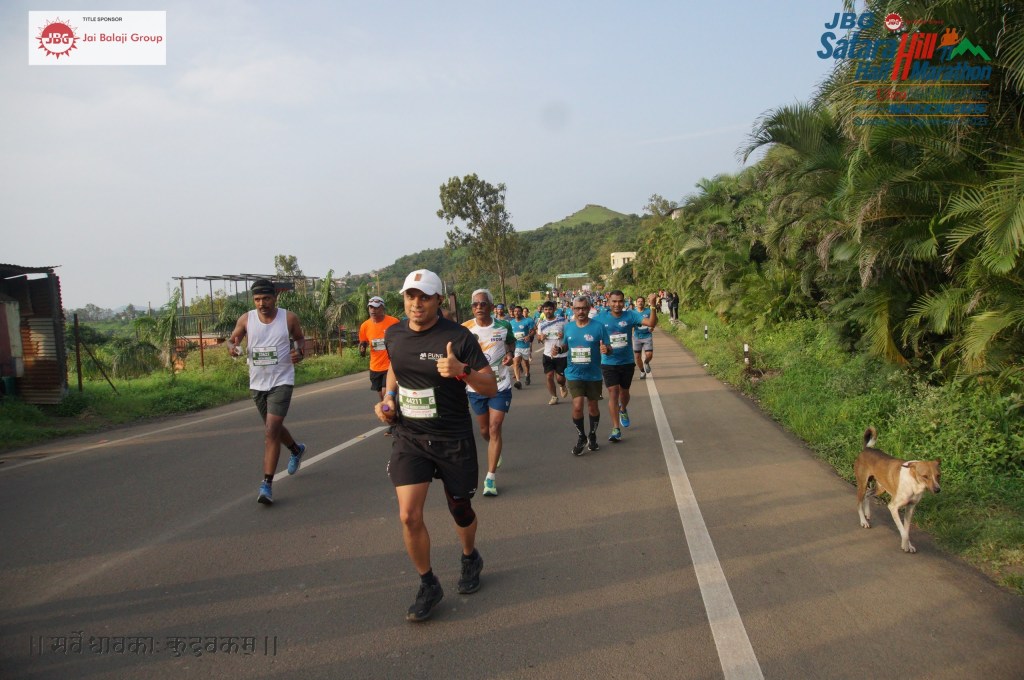
Every runner has a story of resilience and determination. Whether overcoming unhealthy habits, battling illnesses, or breaking societal norms, every runner’s journey is one of perseverance. That’s what makes us constantly seek new challenges, pushing our limits to become better individuals.
After completing the 2021 Hundred Days of Running (HDOR) event, I began training under Coach Manish Jaiswal from Snails2Bolt. In 2022, my hard work paid off. I surprised myself by finishing the Mumbai Half Marathon in almost two hours. But I wasn’t done yet. In 2023, I set my sights on an even bigger challenge—a full marathon.
When Coach Manish invited me to the JBG-Satara Hill Marathon, I couldn’t refuse. Satara, a city with a rich Maratha history, felt like the perfect place to continue my journey. I felt inspired by the warriors who once walked its streets. I knew this marathon would be a true test of both mind and body.
Pre-event preparations
As a passionate runner, I was used to running 3-4 days a week. The Satara Hill Marathon needed extra preparation. Training for this challenging race meant focusing on both physical and mental endurance. I added regular hill runs to my routine to adjust to elevation changes. This strengthened my legs for the tough uphill and downhill terrain. Maintaining a steady pace on steep inclines was crucial, as was adjusting my diet and hydration for higher energy demands. Stretching and recovery became more consistent to avoid injuries. As race day approached, I prepared by studying the route, water stations, and more.
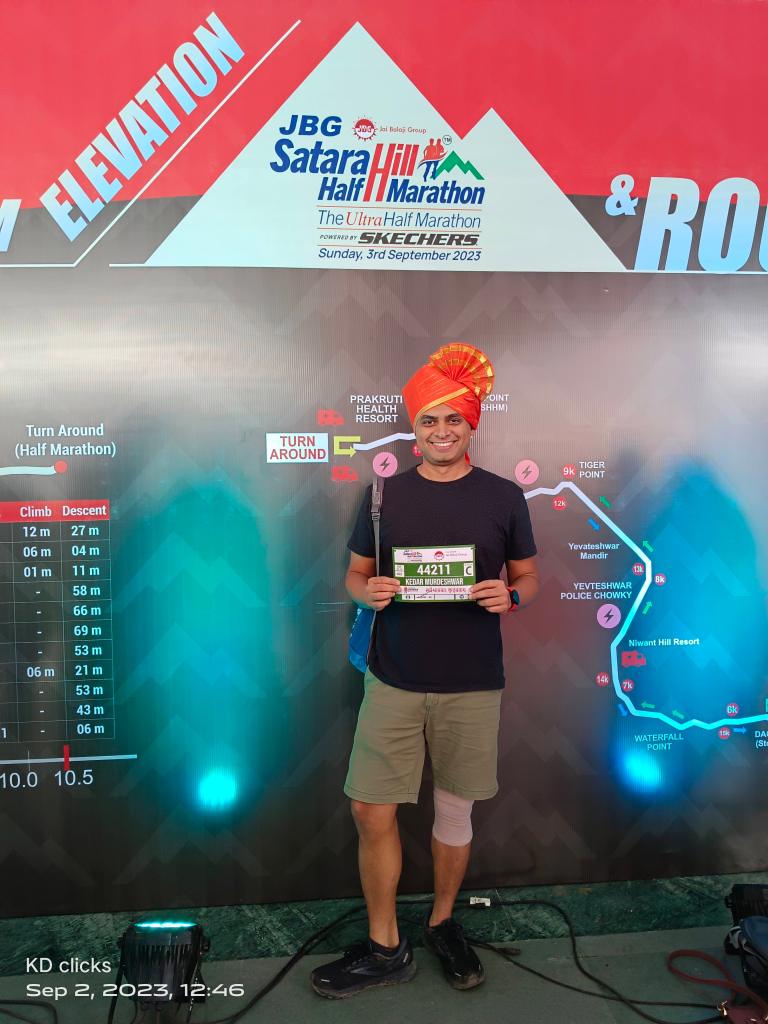
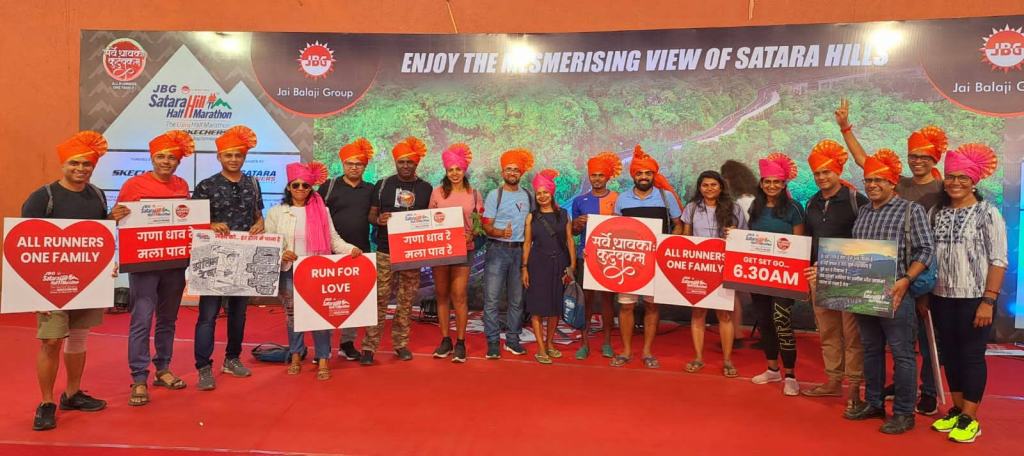
A day before the race, Our troupe reached the location a day before the race. We got a grand reception by the Satarkars. Wearing the traditional “pheta” was a mark of pride. The race expo was a mini-celebration in itself. Meeting with other runners from across India, clicking photos and creating memories was fun. The highlight of every expo is when you get your bib in your hand. That feeling never changes. It is like telling yourself, “You have trained hard – Now there is no looking back”. We collected our kits and gathered all possible information from various stalls and moved into the room early.
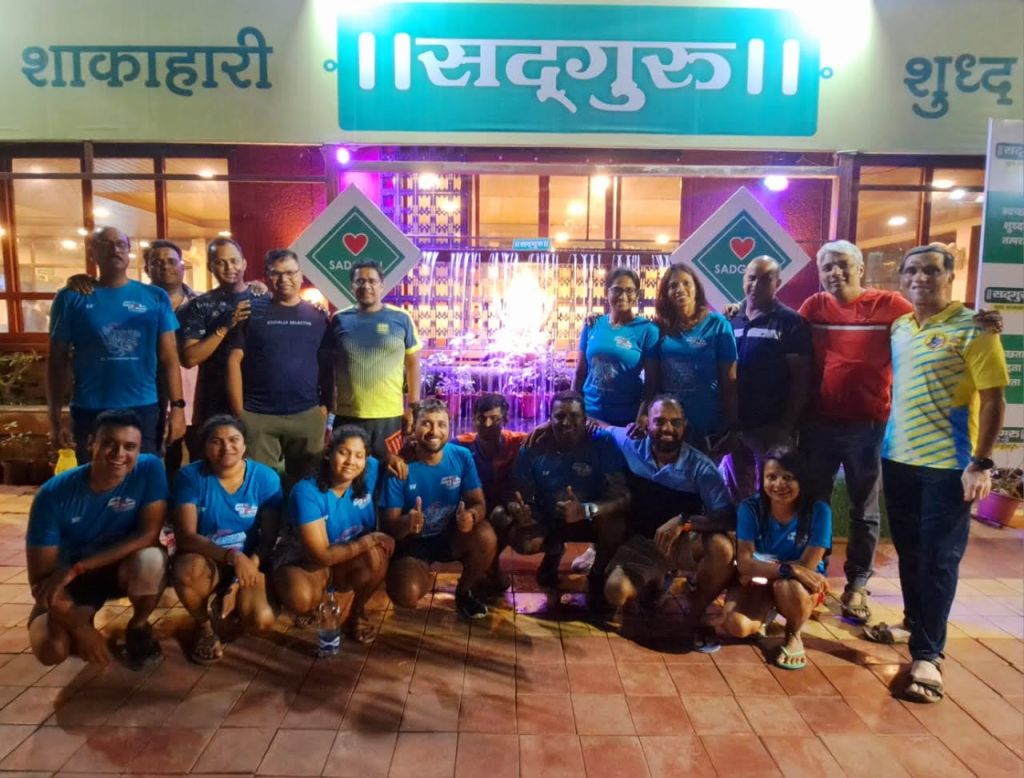
The coach called in a short stretching session in the evening and we proceeded to an early dinner. Pre-race day meal is always my favorite – dal khichdi and aloo jeera – enough carbs and light on the stomach. We then retired to our rooms and slept early to re-energize for the big day.
Race Day
The Satara Hill Marathon is different from other races as it starts a bit late, but the energy is unmatched. The venue was packed with runners from across India. As a first-timer, I felt lost among the elite runners, but excitement filled the air. By 6:15 am, I was at the start line, surrounded by eager participants. With a prayer in my heart, I prepared for the challenge ahead.
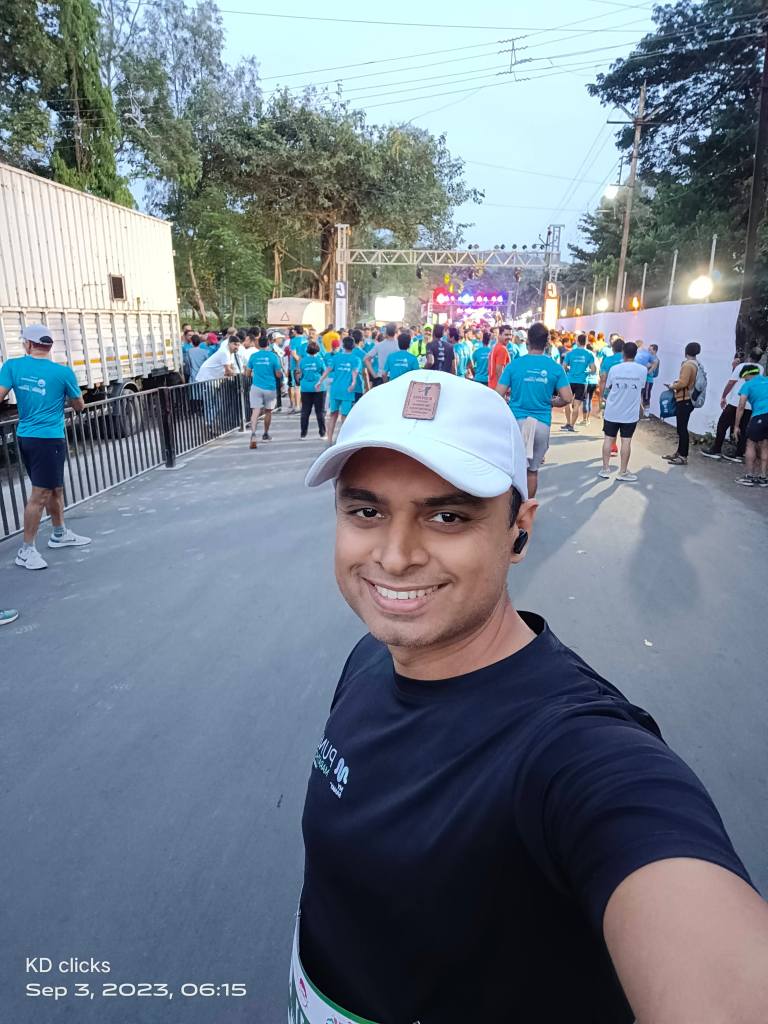
The race began slowly as the sea of runners moved forward. The first kilometer was a struggle to find space, but soon, I settled into a rhythm. Passing through the bustling city market, I was touched by the warm support from the locals. They came out in large numbers, offering water, biscuits, and cheer, while children danced joyfully to loud music. The excitement was infectious!
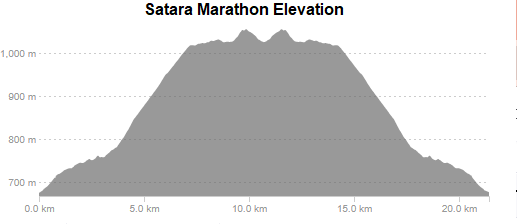
As we left the city, the road began to incline. The gradual slope soon turned steep from 4 to 7.5 kilometers, testing my endurance. My legs screamed with every step, but I kept pushing, following my coach’s advice to silence the mind and keep moving. When I reached the 7.5-kilometer mark, the incline eased, and I finally noticed the breathtaking view of Satara in the valley, bathed in the golden rays of the sun. The serene greenery and cool breeze felt like a reward for the effort.
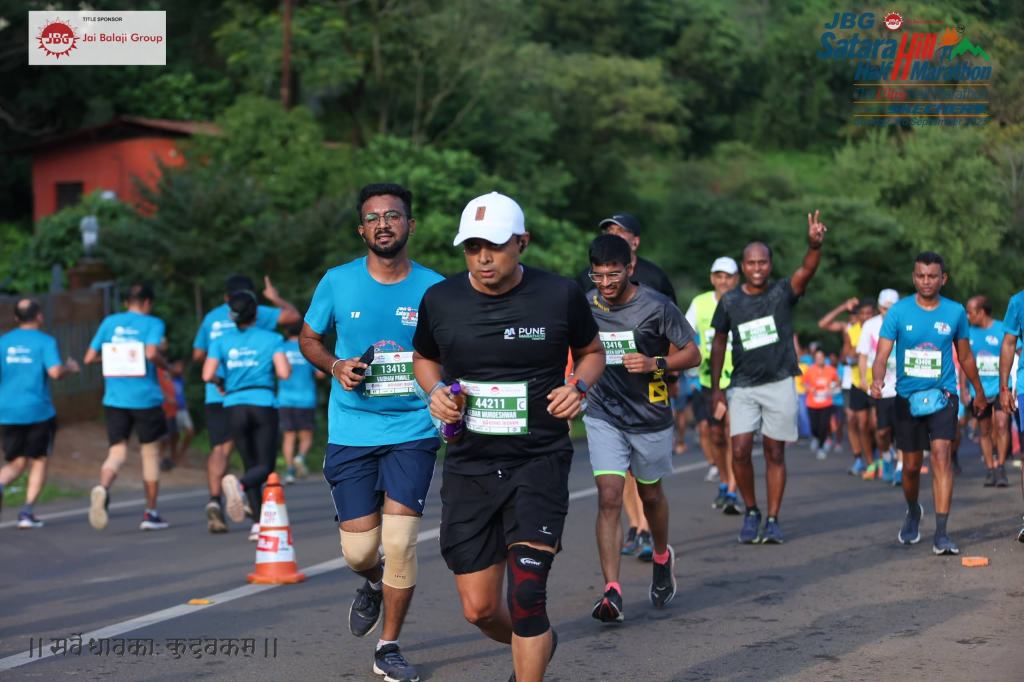
Hydration was key, but I kept it minimal to avoid feeling heavy. After a short uphill stretch at 10 kilometers, tiredness crept in. My eyes searched for the halfway point, and relief washed over me when I spotted it. After the U-turn, I refueled with chicki, biscuits, and electrolytes, ready to tackle the downhill journey.
But downhill running was tricky. Controlling my pace was tough, and the impact on my knees and heels was intense. Around the 15-kilometer mark, I gave in and took longer strides. Slippery roads near water stations added to the challenge, but I managed to complete the 17-kilometer stretch.
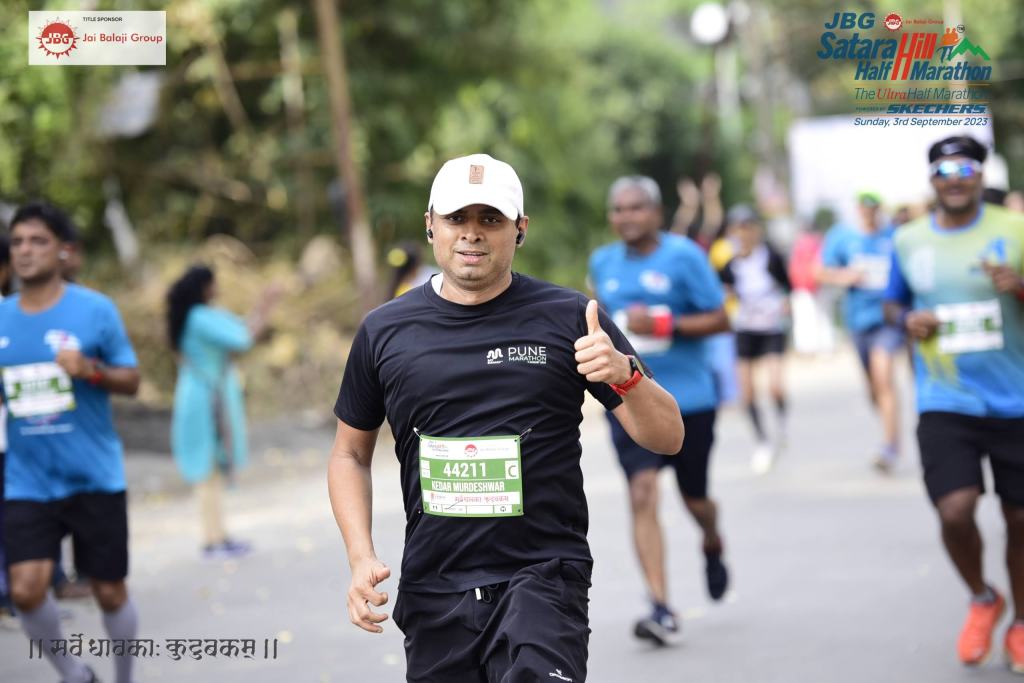
The final 4 kilometers were the hardest. Drained of energy, I thought I might have to walk. But the cheers from the Satarkars gave me a boost. Their encouragement pushed me through the last leg. With every “Come on! Last 800 meters,” I found the strength to push harder. As I crossed the finish line, I saw runners proudly displaying their medals.
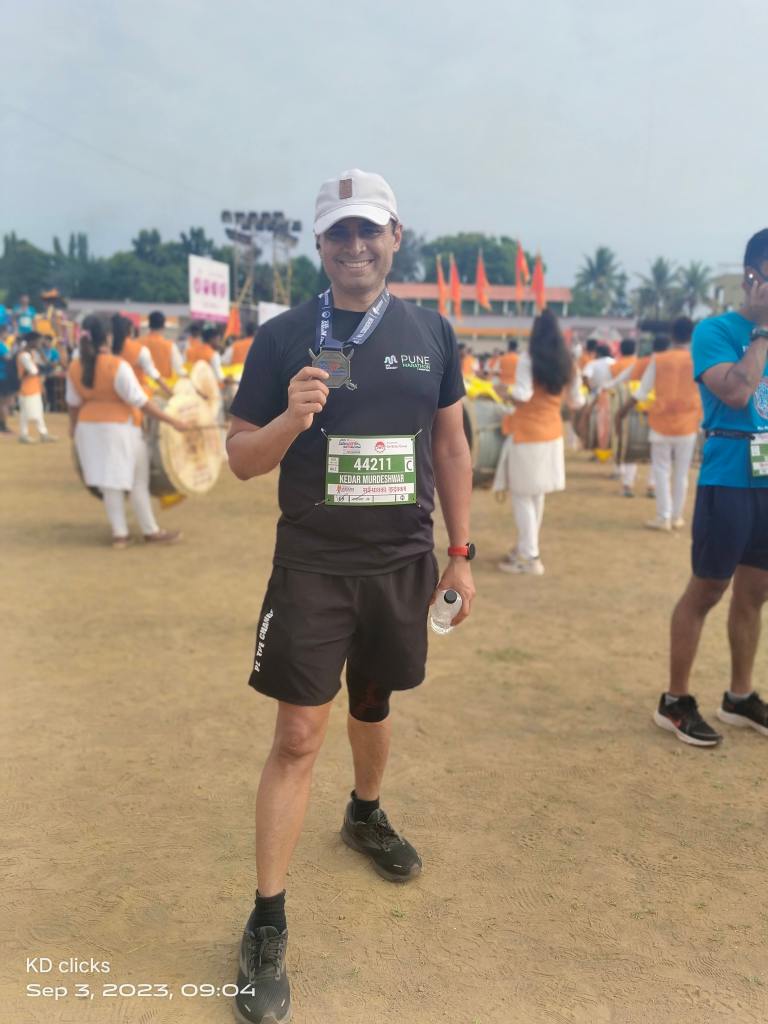
Satara Marathon has three medal categories: gold for finishing in under 2 hours, silver for 2 to 2.5 hours, and bronze for the rest. I completed the race in 2:19:26, earning a silver medal. Wearing that medal filled me with pride as I celebrated with photos and even joined the “dhol-tasha” dance.
I had conquered the hills—a lifetime achievement. Hats off to the organizers, volunteers, my troupe, coach, and family. As I left the venue, I looked at the hills one last time and thought, “See you next year!”
 My Fitness Notion